Alaska + Yukon with Mary
3 min read

Egypt with Mary: Discovering the Wonders of the Nile aboard Uniworld’s S.S. Sphinx
Ancient wonders, extraordinary engineering and a journey through thousands of years of history — Egypt is a destination that needs to be experienced to be fully appreciated.
I recently returned from an unforgettable journey through Egypt, combining visits to Cairo’s ancient treasures with a Nile River cruise aboard Uniworld Boutique River Cruises’ beautiful S.S. Sphinx.
My last visit to Egypt was 27 years ago, and I was amazed by how much had changed. Archaeological discoveries continue to reveal new insights into ancient Egyptian civilisation, while conservation work has uncovered the original colours and intricate details of temples that have stood for thousands of years.
Egypt is a destination for travellers who want to experience history rather than simply see it. The scale of the monuments, the sophistication of the engineering and the quality of the artwork are extraordinary. Yet it is also a country of contrasts, where ancient traditions sit alongside the energy and bustle of modern life.
From the extraordinary collections of the Grand Egyptian Museum to the magnificent temples of Luxor and the tranquil beauty of the Nile around Aswan, this journey offered an incredible insight into one of the world's oldest civilisations.
Here are some of my highlights, along with practical tips for anyone considering their own Egyptian adventure.
Cairo: Ancient history meets modern Egypt
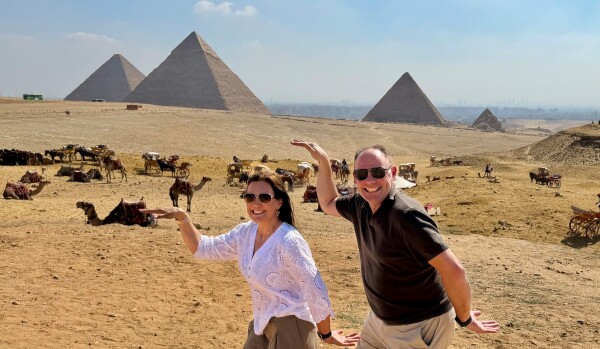
Cairo is enormous, busy and full of contrasts. It provides a fascinating introduction to modern Egypt while placing you within reach of some of the world's most recognisable ancient monuments.
There are more than 100 known pyramids across Egypt, with the most famous group at Giza, just outside central Cairo. Seeing these immense structures in person is a remarkable experience. Their scale and precision are difficult to appreciate until you are standing before them.
Understanding the ancient Egyptians' relationship with the Nile also helps make sense of what you see throughout the journey. The river flows from south to north towards the Mediterranean, and its annual flooding historically provided the fertile land that sustained Egyptian civilisation. The east bank was associated with the rising sun, life and the living, while the west bank became closely associated with the setting sun, death and the afterlife. This symbolism is reflected in the placement of many temples, settlements and royal burial grounds.
The Grand Egyptian Museum: A must-see in Cairo
One of the highlights of our Cairo visit was the Grand Egyptian Museum (GEM), an extraordinary modern building whose geometric forms draw inspiration from the pyramids and surrounding landscape.
The museum houses an enormous collection of ancient Egyptian artefacts, bringing together treasures that reveal the sophistication of this remarkable civilisation.
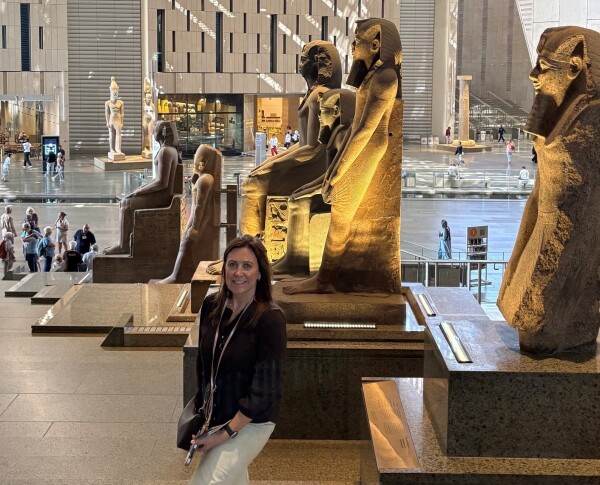
Three highlights stood out:
Ramesses II: The colossal statue of this powerful pharaoh is an impressive introduction to the museum.
The Tutankhamun collection: Seeing the extraordinary objects recovered from the young pharaoh's tomb was a real highlight for me. The collection is beautifully displayed and offers a fascinating insight into royal life, religious beliefs and burial practices.
The Khufu Solar Boat: This ancient vessel, dating to around 2500 BC, demonstrates the remarkable boat-building skills of the Egyptians.
The Tutankhamun collection was particularly memorable. It is incredible to consider what archaeologist Howard Carter and his team discovered when they opened the tomb in 1922, and how much has been learnt from its contents.
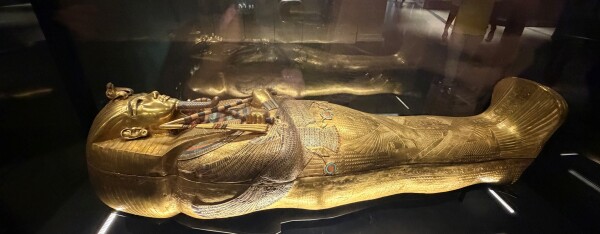
My tip: Book a private Egyptologist guide for the museum. There is so much to see that you could easily spend hours here. Having your own guide means you can tailor the visit to your interests, choose your pace and gain a much deeper understanding of the artefacts rather than simply walking past them.
A little background: The world of the pharaohs
Ancient Egyptian civilisation developed around 3000 BC and continued through approximately 30 dynasties. Over this extraordinary span of time, the Egyptians developed sophisticated systems of writing, mathematics, medicine, engineering and art.
Religion shaped almost every aspect of their lives. They worshipped many gods and believed that death was a transition to another existence. Elaborate tombs, intricate wall paintings and carefully prepared burial offerings were intended to help the deceased navigate the afterlife.
Once you understand these beliefs, the temples and tombs you visit along the Nile become much more than beautiful ancient structures. Their symbols, stories and decoration begin to reveal an entire worldview.
Luxor: An extraordinary open-air museum
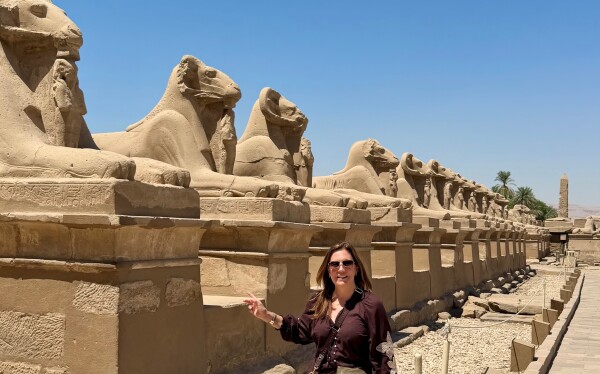 Luxor was one of the most important centres of ancient Egypt and became a major royal capital during the New Kingdom. Today, it feels like an open-air museum, with an extraordinary concentration of temples and tombs on both sides of the Nile.
The surrounding countryside is also a reminder that the Nile remains central to life in Egypt. Fertile agricultural land, including extensive sugar-cane production, contrasts with the dry desert landscape beyond.
Luxor was one of the most rewarding parts of our journey, with each site offering a different perspective on the lives, beliefs and ambitions of the pharaohs.
The Avenue of the Sphinxes (pictured above)
The restored Avenue of the Sphinxes is a remarkable ceremonial route connecting Karnak Temple with Luxor Temple.
Extending for approximately 2.7 kilometres, it is lined with sphinx statues and was used for religious processions associated with the annual Opet Festival, when sacred images of the gods were carried between the temple complexes.
The avenue was uncovered and restored over many years and was officially reopened in 2021. It is a wonderful example of how archaeological work continues to transform our understanding of ancient Egypt.
It is extraordinary to walk along a route that played such an important role in religious life thousands of years ago.
Karnak Temple: Monumental in every sense
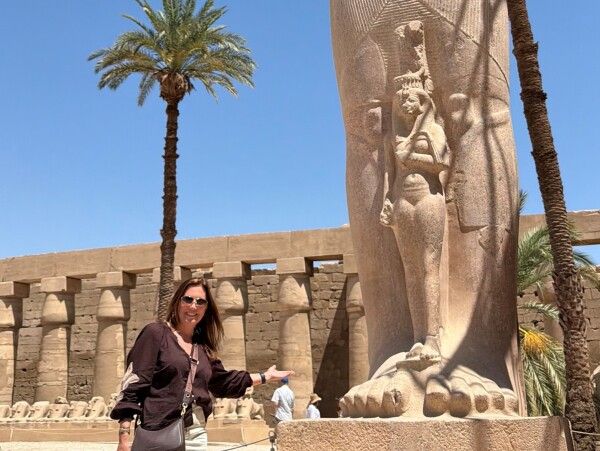 Karnak is one of the largest ancient religious complexes ever constructed. It developed over many centuries and was dedicated primarily to Amun-Ra, one of the most important gods in ancient Egyptian religion.
The scale is almost impossible to comprehend until you walk among its enormous columns.
The Great Hypostyle Hall is particularly spectacular, containing 134 massive columns decorated with hieroglyphs and reliefs. Many were originally painted in vivid colours, and conservation work has helped reveal more of the surviving detail.
Other highlights include the obelisks associated with Queen Hatshepsut and the avenue of ram-headed sphinxes, which symbolised protection and formed part of the temple's ceremonial landscape.
Karnak is a place where you can spend hours exploring, and having a knowledgeable guide explain the stories behind the carvings makes a tremendous difference.
Travel tip: Visit temples early in the morning whenever possible. During our September visit, temperatures were around 33°C in the morning, rising to 38–42°C later in the day. The heat can be intense, particularly when walking through exposed archaeological sites. Carry water, wear a hat and comfortable shoes, and allow time to rest.
Dendera Temple: Colour that has survived the centuries
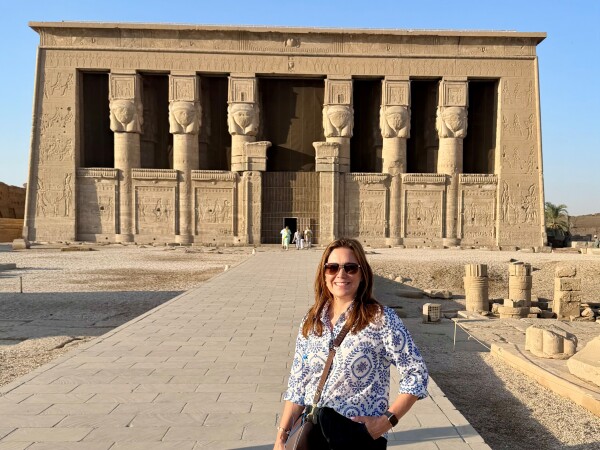 Located north of Luxor, the Temple of Dendera is dedicated primarily to Hathor, the goddess associated with love, music, beauty, motherhood and joy.
Although the site has a much longer sacred history, much of the surviving temple dates from the Ptolemaic and Roman periods.
What makes Dendera so special is the remarkable preservation of its decoration. The ceilings, walls and columns retain intricate details and beautiful colours that bring the ancient artwork to life.
Highlights include the astronomical ceiling, detailed hieroglyphic inscriptions, decorated crypts and the stairway leading to the roof. Outside, impressive reliefs include depictions of Cleopatra VII and her son Caesarion.
Dendera provides a wonderful contrast to the monumental scale of Karnak. Here, it is the extraordinary detail and preservation of the artwork that leave the strongest impression.
The Valley of the Kings: Inside the pharaohs' tombs
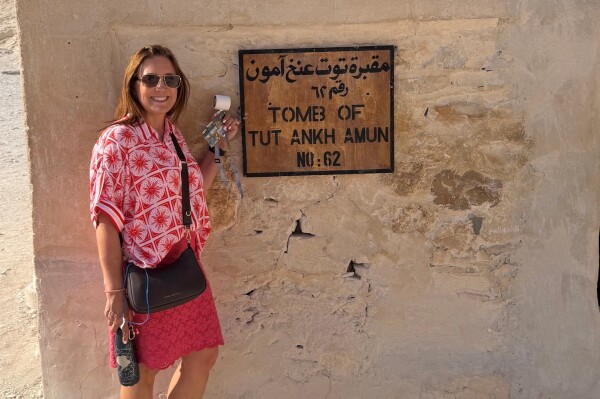 On Luxor's west bank lies the Valley of the Kings, the royal burial ground used during much of the New Kingdom.
The pharaohs were buried in tombs cut deep into the surrounding mountains, rather than in the monumental pyramids associated with earlier periods. The landscape includes Al-Qurn, a naturally pyramid-shaped peak that may have contributed to the site's symbolic significance.
More than 60 tombs and chambers have been identified here. Access arrangements vary, and the tombs available to visitors can change as conservation requirements are managed. Standard tickets generally cover a selection of tombs, while certain famous tombs require a separate ticket.
Inside, steep passages descend into the rock, revealing walls covered in beautifully detailed paintings and hieroglyphics. These decorations tell stories of the gods, the journey through the afterlife and the rituals intended to help the pharaoh achieve eternal life.
One fascinating concept is the weighing of the heart against the feather of Ma'at, representing truth and justice. According to ancient Egyptian belief, a person's heart needed to balance against this feather to pass successfully into the afterlife.
We visited several tombs, each with its own character:
Ramesses IV: Particularly impressive for its colourful and beautifully preserved decoration.
Ramesses III: An extensive tomb with elaborate painted scenes and a fascinating history.
Ramesses I: A smaller tomb with striking decoration, demonstrating how much artistry could be incorporated into these underground chambers.
Tutankhamun: Much smaller than many people expect, reflecting the circumstances of his early death and burial. The tomb is famous for its discovery in 1922, while many of its extraordinary treasures are now displayed at the Grand Egyptian Museum. Tutankhamun's mummy remains in the tomb.
One thing to know is that guides generally explain the history and symbolism before you enter the tombs, rather than accompanying you inside. Listen carefully to their explanations beforehand, as it helps you appreciate what you are seeing.
The Temple of Queen Hatshepsut
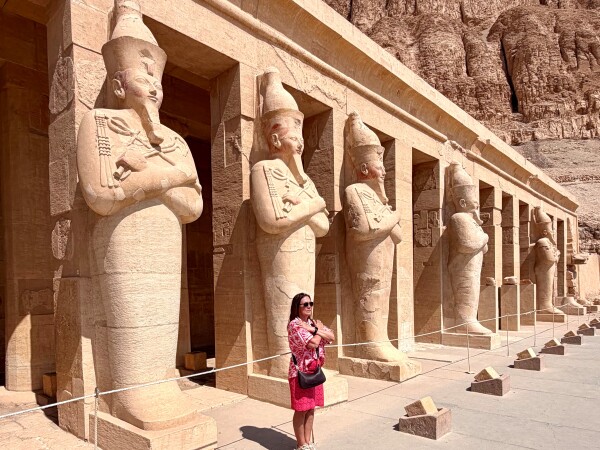 The mortuary temple of Queen Hatshepsut is one of the most distinctive monuments on Luxor's west bank.
Hatshepsut ruled Egypt for approximately two decades during the 18th Dynasty and presided over a prosperous period. She promoted trade and commissioned an important expedition to the Land of Punt, an ancient trading region whose precise location remains debated.
Her temple rises in a series of elegant terraces against the cliffs, creating a striking architectural contrast with the surrounding landscape.
The walls depict her royal status and divine birth. After her death, some of her images and inscriptions were deliberately damaged or removed, particularly during the reign of Thutmose III, although the reasons and timing of this destruction remain debated.
The temple has undergone extensive restoration, and archaeological research has also helped identify Hatshepsut's mummy.
It is a fascinating place to learn about one of Egypt's most remarkable female rulers and the challenges she faced in maintaining her authority.
Luxor Temple: Kingship, religion and the Opet Festival
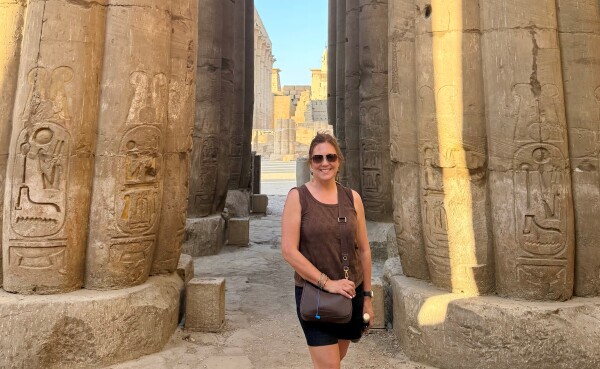 Luxor Temple sits on the east bank of the Nile and is closely connected to Karnak by the Avenue of the Sphinxes.
While Karnak developed into a vast religious complex over many centuries, Luxor Temple had a particular association with kingship, royal renewal and the annual Opet Festival.
Its impressive entrance, statues, columns and courtyards reflect the achievements of several rulers and periods of Egyptian history.
Luxor Temple also provides an opportunity to understand the dramatic religious changes introduced by Akhenaten, who promoted the worship of the Aten, the sun disc. Following his death, traditional religious practices were restored. His son, initially named Tutankhaten, became known as Tutankhamun.
The temple is especially atmospheric, and its relationship with Karnak becomes much clearer once you have visited both sites.
If time allows, walk part of the Avenue of the Sphinxes after your visit and imagine the processions that once connected these two great centres of worship.
Cruising the Nile aboard Uniworld's S.S. Sphinx
 One of the great advantages of exploring Egypt on a river cruise is the opportunity to travel between major archaeological sites while enjoying a comfortable and relaxing base.
After busy days exploring temples and tombs, returning to the ship provides a welcome change of pace. Watching everyday life unfold along the Nile, with green riverbanks, villages and agricultural land contrasting with the desert beyond, is an experience in itself.
The S.S. Sphinx is a beautiful boutique river cruise ship designed to reflect the culture and craftsmanship of Egypt.
With just 42 beautifully appointed suites, the ship offers an intimate atmosphere and a high level of comfort. Onboard facilities include two gourmet dining venues, a swimming pool and a massage room.
The interiors feature bespoke design by local artisans, with materials and finishes including Egyptian cotton, marble and hand-carved blonde wood. These details celebrate local craftsmanship while creating an elegant setting that feels connected to the destination.
For me, the combination of immersive sightseeing and comfortable river cruising is one of the strongest reasons to consider this style of holiday. You can explore extraordinary ancient sites without having to organise every transfer and hotel stay independently.
The Nile provides the thread connecting the journey, allowing the history, landscape and culture of Egypt to unfold at a more relaxed pace.
Kom Ombo: A temple dedicated to two gods
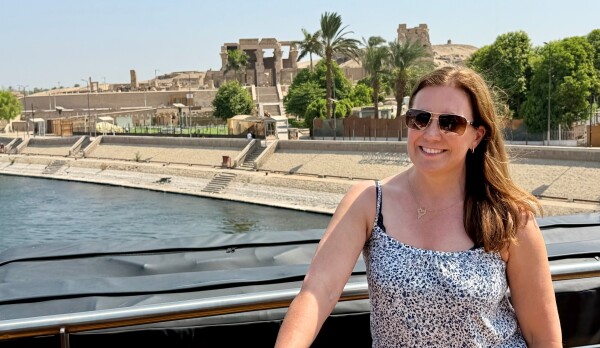 Kom Ombo is one of Egypt's most unusual temples because it was dedicated to two gods: Sobek, the crocodile-headed god associated with the Nile and fertility, and Horus the Elder, the falcon-headed god.
Built primarily during the Ptolemaic and Roman periods, the temple has a distinctive symmetrical design, with separate areas serving the two cults.
Look closely at the reliefs and you will find fascinating details, including depictions of instruments that some interpret as surgical tools, offering insights into ancient medical practices.
The nearby Crocodile Museum houses mummified crocodiles associated with the worship of Sobek, providing another perspective on the religious significance of these animals.
Kom Ombo also offers an insight into how closely ancient Egyptian life was connected to the river. The site includes evidence of nilometers, devices used to measure the Nile's water levels, which were important for understanding flooding and anticipating agricultural conditions.
It is a fascinating stop that adds another layer to the story of life along the Nile.
Aswan: Nubian culture and the engineering achievements of modern Egypt
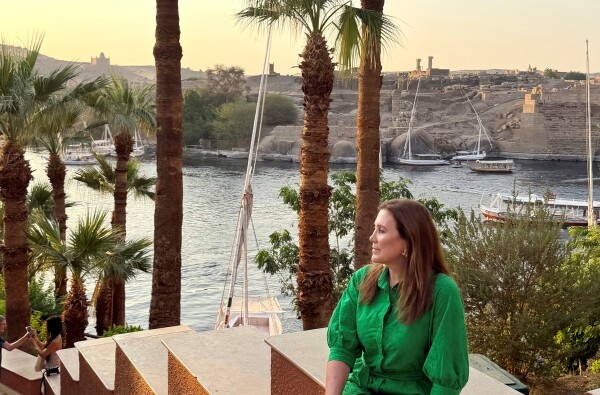 Aswan has a different feel from Cairo and Luxor. The landscape is beautiful, the Nile is particularly picturesque, and there is a strong connection to Nubian culture and the history of southern Egypt.
The construction of the Aswan High Dam transformed the region, creating Lake Nasser and dramatically changing the landscape. It also threatened numerous ancient monuments with flooding, prompting one of the most remarkable international archaeological rescue programmes of the 20th century.
Several temples were dismantled and reconstructed at new locations, preserving them for future generations.
Two of the most memorable examples are Abu Simbel and Philae, both of which are well worth understanding as part of a wider Egypt itinerary.
Abu Simbel: An unforgettable highlight
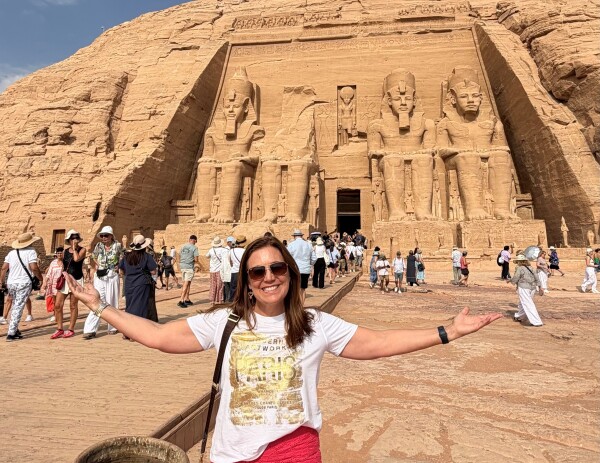 Abu Simbel was one of the highlights of my trip, and I highly recommend considering it as an optional excursion.
It is an expensive addition because of the flights and logistics involved, but for me, the experience was worth it. If you have travelled all the way to Egypt, these magnificent temples are extraordinary to see in person.
Built during the reign of Ramesses II in the 13th century BC, the temples stand near Egypt's southern border in what was historically Nubia.
The Great Temple is guarded by four enormous seated statues of Ramesses II, each approximately 20 metres high. Their sheer scale is breathtaking.
Inside, the walls are covered with reliefs celebrating the pharaoh's military victories and his relationship with the gods. The sanctuary is also famous for a solar alignment that illuminates three of its four seated divine figures on particular days of the year, while the statue of Ptah remains in darkness.
Nearby is the smaller temple dedicated to Queen Nefertari, one of Ramesses II's principal wives. Its beautiful decoration includes representations of Nefertari alongside the goddess Hathor.
The extraordinary story of moving Abu Simbel
The history of Abu Simbel is remarkable not only because of its ancient architecture but also because of the modern engineering achievement that saved it.
When the Aswan High Dam was built, the temples were threatened by the rising waters of Lake Nasser. An international campaign led by UNESCO resulted in the monuments being carefully cut into large blocks, dismantled and reconstructed on higher ground between 1964 and 1968.
The temples were effectively rebuilt inside an artificial mountain, preserving these extraordinary structures for future generations.
It is one of the great archaeological rescue projects of the modern era and adds another dimension to the visit.
Philae Temple: A beautiful island sanctuary
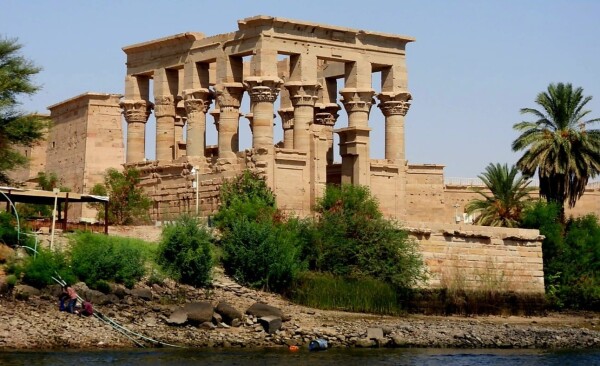
Philae Temple is dedicated primarily to Isis, one of the most important goddesses in ancient Egyptian religion.
The complex was originally located on Philae Island but was threatened by rising water following the construction of the Aswan dams. It was carefully dismantled and reconstructed on nearby Agilkia Island as part of the international rescue programme.
Reaching the temple by boat is part of the experience. Approaching across the water, with the temple rising from the island, is particularly memorable.
The complex contains impressive courtyards, columns and reliefs, and its setting feels quite different from the vast temple complexes around Luxor.
Philae is a wonderful example of how modern engineering and international cooperation have helped preserve Egypt's extraordinary heritage.
Kalabsha Temple: Preserving Nubian history
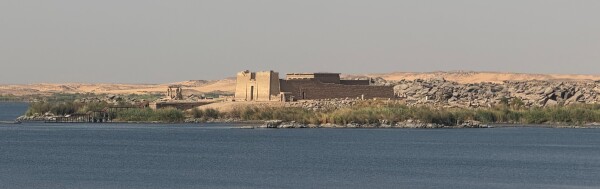 Kalabsha is another important Nubian monument rescued from the rising waters created by the Aswan High Dam.
The temple, dedicated to the Nubian sun god Mandulis, dates primarily to the Roman period. It was relocated to a new site beside Lake Nasser to protect it from flooding.
Although it may receive less attention than Abu Simbel, Kalabsha is a valuable reminder that the rescue operation involved many monuments, not just Egypt's most famous temples.
For travellers interested in archaeology, engineering and Nubian history, it adds an interesting perspective to the Aswan region.
Esna Temple: Remarkable colour beneath the surface
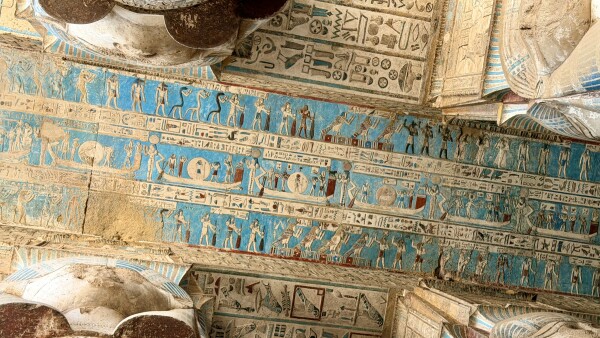 The Temple of Esna is another fascinating stop along the Nile, particularly for visitors interested in ancient Egyptian art.
Only part of the original temple survives, but the remaining hypostyle hall contains impressive columns and exceptionally colourful decoration.
The ceilings and columns feature astronomical imagery, gods and detailed hieroglyphic inscriptions. The surviving colours are particularly striking and help bring the ancient artwork to life.
Like Dendera, Esna demonstrates how much detail can survive beneath layers of time, and how conservation work continues to reveal the artistry of the ancient world.
It is a rewarding stop that complements the larger, more monumental sites elsewhere along the river.
My top tips for travelling to Egypt
Egypt is an extraordinary destination, but a little preparation makes a real difference to how much you enjoy it.
1. Choose a knowledgeable Egyptologist guide.
There is an enormous amount of history behind every temple and tomb. A good guide helps you understand the symbolism, historical context and stories that you might otherwise miss. A private guide in Cairo is particularly worthwhile if you want to spend longer at the Grand Egyptian Museum.
2. Start sightseeing early.
The heat can be intense, especially around Luxor and the Valley of the Kings. Morning visits are generally much more comfortable than exploring exposed sites during the afternoon.
3. Consider Abu Simbel carefully — but don't dismiss it because of the price.
The additional flights and transfers make this an expensive excursion, but the temples are spectacular. If they are important to you, discuss the options when planning your itinerary.
4. Allow time to absorb the sites.
The Grand Egyptian Museum deserves more than a quick visit, while Karnak and the Valley of the Kings can easily fill a substantial part of the day. A well-planned itinerary balances sightseeing with time to rest.
5. Embrace modern Egypt as well as its ancient history.
The food, markets, local transport and everyday life are all part of the experience. Egypt can be busy, dusty and overwhelming at times, but its energy and contrasts are what make it such a fascinating destination.
6. Choose a Nile cruise that suits your travel style.
A river cruise provides a comfortable way to connect many of the major archaeological sites, with accommodation, dining and transport organised as part of the journey. The S.S. Sphinx is a particularly appealing option for travellers who appreciate boutique surroundings and locally inspired design.
Is Egypt the right destination for you?
Egypt is ideal for travellers with a curiosity about history, culture, architecture and ancient civilisation. It is especially rewarding for those who enjoy learning about a destination rather than simply ticking off its famous sights.
The combination of Cairo, Luxor and Aswan offers an extraordinary range of experiences, from the pyramids and museum collections to monumental temples, richly decorated tombs and beautiful river scenery.
The Nile cruise brings these experiences together, offering a more relaxed way to travel between the major sites while enjoying the comfort of a boutique ship.
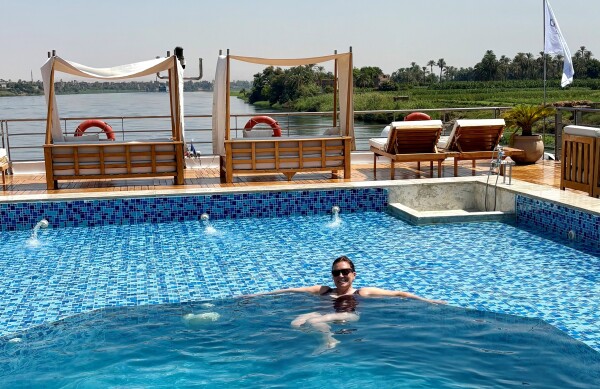
My return to Egypt after 27 years reminded me just how much there is to discover. New archaeological insights, conservation work and the extraordinary stories behind these monuments continue to deepen our understanding of ancient Egypt.
If Egypt is on your travel wish list, I would encourage you to explore it properly. With the right itinerary, knowledgeable guides and time to appreciate the highlights, it is a journey that can stay with you for a lifetime.
If you would like to discover Egypt for yourself, the team at Shore Travel can help you explore Uniworld's Nile River cruise options, consider excursions such as Abu Simbel and plan a journey that suits your interests, travel style and budget.
Contact Shore Travel to start planning your own Egyptian adventure.